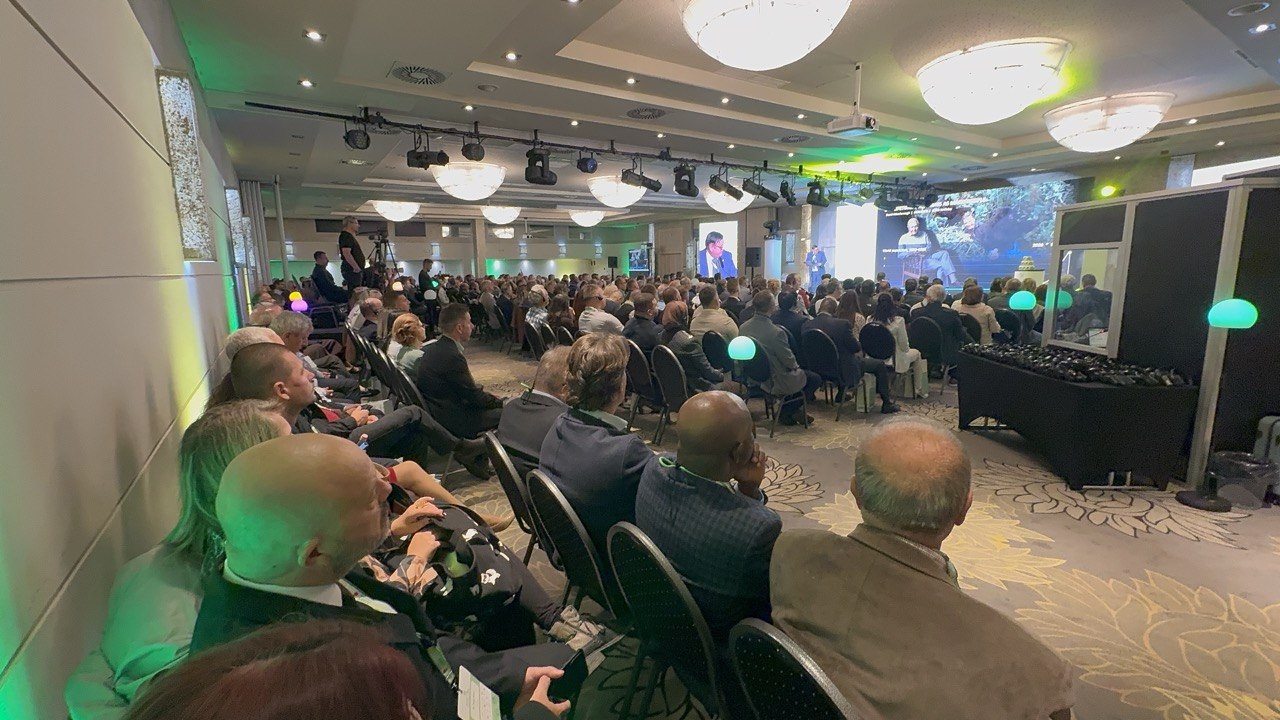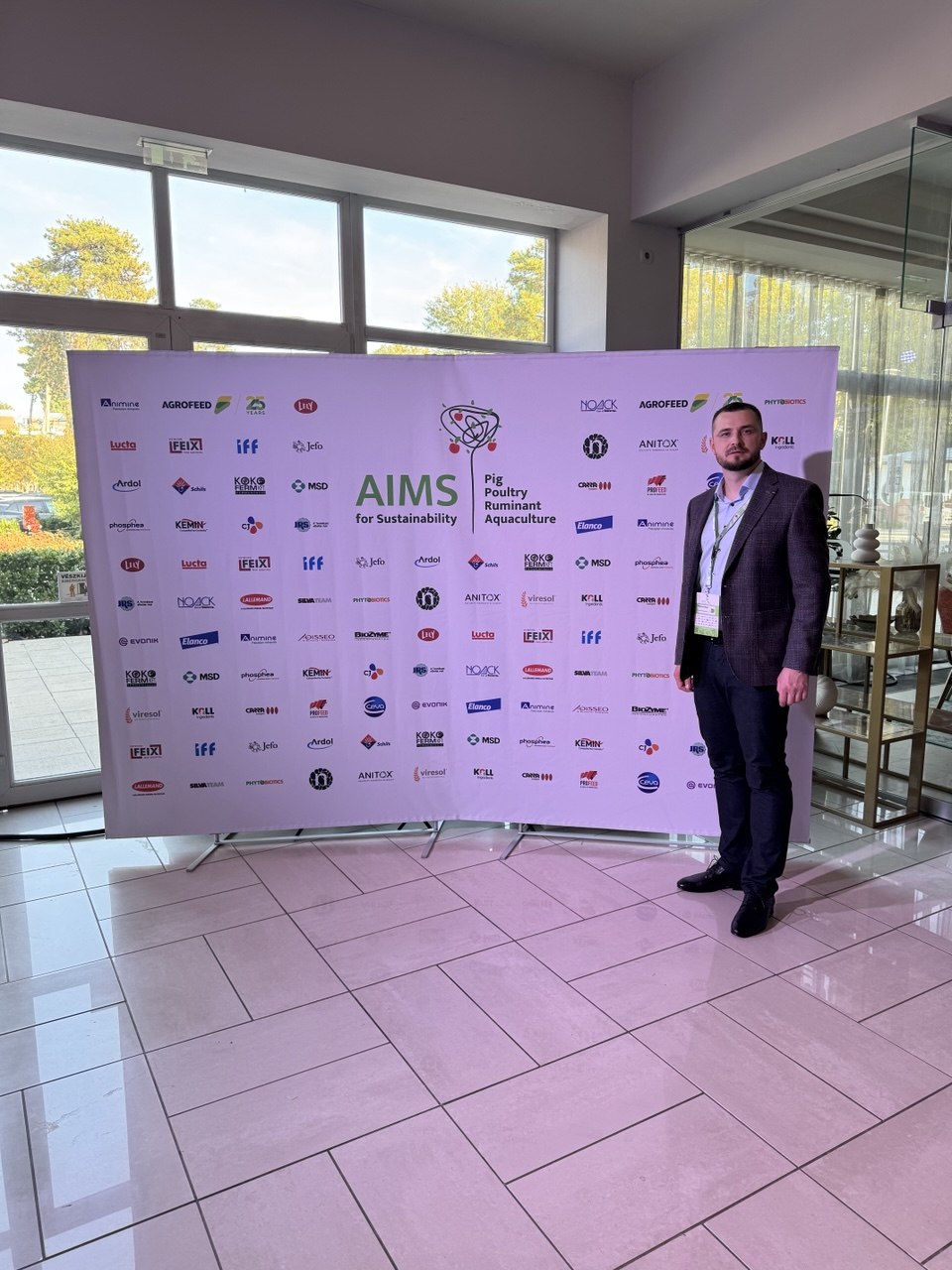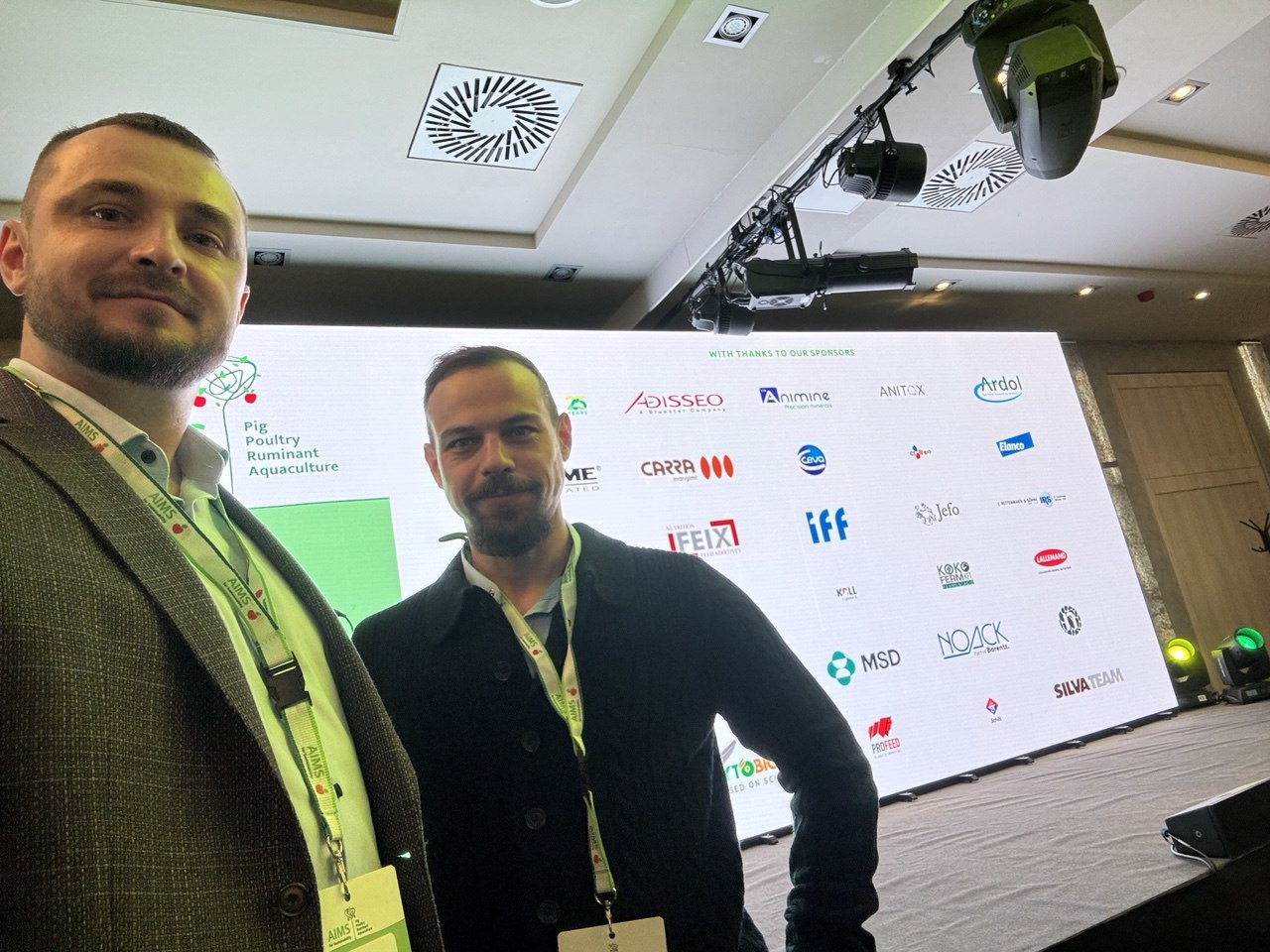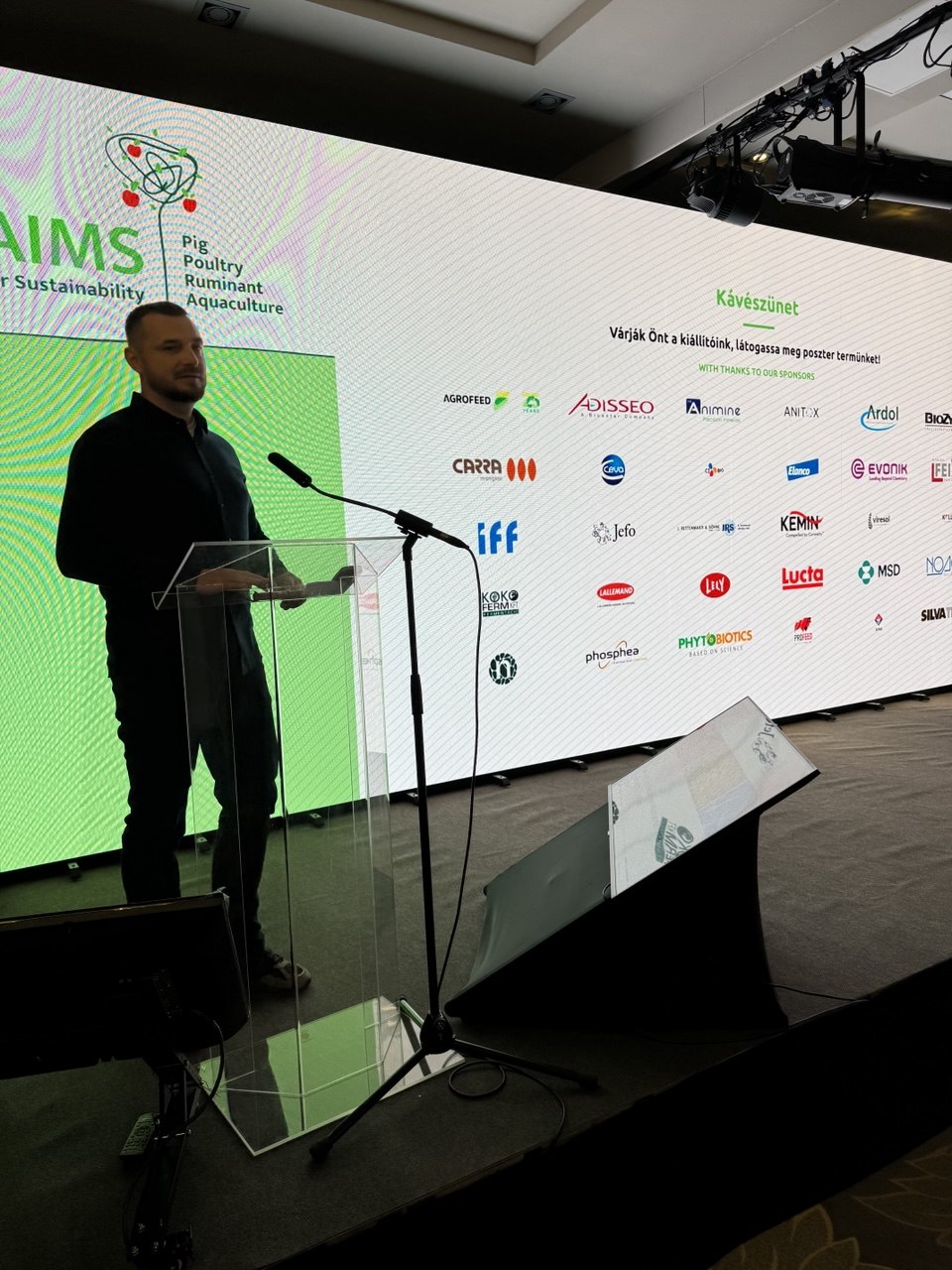


From October 19 to 22, 2026, Vasyl Borysovych Todoriuk—a Candidate of Veterinary Sciences and Senior Researcher at the Laboratory of Intellectual Property and Analytical Research of the Institute of Animal Biology (National Academy of Agrarian Sciences of Ukraine)—participated in the AIMS 2026 International Symposium on Animal Nutrition, held in Siófok, Hungary, at the invitation of Agrofeed Kft.
This year’s symposium focused on key issues regarding the sustainable development of animal husbandry, the improvement of feeding technologies, and the enhancement of feed resource utilization efficiency. The event’s themes align directly with the research conducted at the Institute of Animal Biology (NAAS), particularly concerning physiological stress in animals and the application of feed additives in livestock production.
The symposium program included a plenary session and thematic sections dedicated to poultry, swine, cattle, and aquaculture. The forum brought together 30 invited speakers and 32 experts representing companies that manufacture feed additives and veterinary products.
Within the swine and poultry sections, particular attention was paid to the impact of heat stress on the nutrient requirements of sows, modern approaches to feeding piglets post-weaning, and the role of zinc, butyrate, and histidine in maintaining animal health and preventing diarrhea. Among other topical issues, discussions covered solid-state fermentation technologies for protein-rich feeds, the use of alternative protein sources, and the potential application of probiotics, enzyme preparations, and polyphenolic compounds in the nutrition of farm animals.
During the symposium, Vasyl Todoriuk also participated in a round-table discussion and met with Tibor Chitkovich, the owner of the company Agrofeed, along with the company’s leading specialists.
Participation in this international scientific and practical forum provided another opportunity to explore current global trends in animal nutrition, exchange professional expertise, and establish connections with representatives from the scientific and business communities. The insights gained are of practical value for future research at the Institute of Animal Biology of the NAAS (National Academy of Agrarian Sciences).